Category: Begin

Producing on a Budget
Before coming up with serious budget planning that would include three or four zeros to record in your dream studio with the coolest army of engineers, everyone needs to take the first step and record their ideas with what they have. And today you can do it well. Unlike some years ago, today’s creative minds have budget-friendly technology on their side. Easy-to-grasp interfaces, user-friendly applications, and approachable prices on pretty good gear make home studios a go-to for most indie musicians. The key idea is to remember how many great recordings were done with what gear and how many years ago. The most expensive instrument sounds bad in the hands of a bad player. The same goes for your home studio gear as well. Having the most expensive equipment is not going to provide the solution just like that, and having the cheapest is not going to create all the problems either. Once you start, you can upgrade bit by bit each of these items: DAW (digital audio workstation):For those on a tight budget, Reaper is one of the most user-friendly workstations that asks their users to financially contribute based on their idea of a user-karma. They trust their users and by the end of your first few sessions you will see how much the program is worth and when you can, you will not think twice about the payment. Audio interface:These days many types of professional sound cards (audio interfaces) have the form of an external USB unit which makes things more practical than ever. This helps a lot with starters to invest in reliable sources. Even the cards meeting the older, "slow", USB 1.1 specifications are capable of pretty high-quality sound. So make sure to check the second-hand market to see if there are some gems out there. Microphones:As the Peter Parker principle goes; “With great power comes great responsibility.” Sometimes for the very beginning, a low-end, less sensible microphone can be easier to manage. When you are embarking on your journey to the unknown lands of room acoustics, the most sensible microphone can frustrate you more than reward you. For your training purposes, it is a good idea to keep in mind to experiment with various gear instead of investing in that one expensive thing. Even starting with your smartphone’s microphone, you can experiment with what mic positioning can do to your recordings. With that said, we enter into room acoustics. The acoustic treatment gives you control over the sound of your room while you are recording and listening. Recording in a treated room gives you a much easier sound to work with. The listening experience becomes entirely different in a treated room as well. Your gear can go from thick curtains that are not in use to custom-made acoustic isolation panels. Health tip: bedroom/studio owners, research well before going in the direction of glass wool. Make sure to read and grasp the physics behind the rules, and then start with what you have, think out of the box. Filling up the bookshelf behind you can change the sound more than you can imagine. Headphones and speakers are there for you to finish the making of your sound creation. Your listening experience needs good end gear to make sure your mix is airtight indeed. But bear in mind, the first productions that will come from your home will firstly hit the smartphones and various wireless speakers of your friends and colleagues while you are showing your project around. Whichever type of headset or monitor you own, make sure to test your music on (relatively) cheaper devices as well. And once your audio production is done, with our album cover library that grows hundreds of covers each year, we will cover the rest. (pun intended)

Budgeting the Business
We all must have seen that Frank Zappa interview like a million times by now, if you haven’t please google “Frank Zappa explains the decline of the music business” and spend some quality time learning some fundamentals that today's experts either openly quote or simply resell when talking about marketing and music business. Budgeting (of time and money) was, is, and will always be a huge part of the music business. There were times when the independent musician was not even a possibility, unless you were Florence Foster Jenkins (assuming you would only receive her attributes regarding her wealth, otherwise you wouldn’t be much of a success no matter what budget you put in your project). Each signature label that we either have posters from their album arts or actual LPs of came with that one person who budgeted the whole thing; besides the epic musicians that made the music and incredible sound engineers that recorded the whole thing and, of course, amazing album cover designers that presented the epic musicians and the incredible sound engineers in their album art designs. Hence, signing to a label meant more than just finding the right people to work with; it meant a financial safety net, distribution guarantee, and promotional support. Today though, the musician is figuring out ways of self-standing, and independence musicianship is gaining more and more recognition all around the world. Hardly any composer until Beethoven put ink on paper without a contract or a promise, no matter how innovative, rebellious, and/or unique their music was. The ones we have at least heard their names of were the ones who surely got the job done and then went beyond it by their own will. But since then independent musicianship has been on the rise, taking the risk on your own is on the rise, and today doing it all by yourself seems to be more possible than ever. How can it be done though? We have to be our business managers while being musicians as well. One of the many hats needs to be the “budget planner” hat. Because, here it goes, the essence of this article; time is money, good gear is money, and educating yourself is money. In the meantime, money can buy time, and good gear and established knowledge can save time. The trick is to find the sweet spot and invest in the thing that will pay itself in the quickest way possible, which often can be the time it saves that you will be spending to make more money in the end. So, an independent musician’s responsibility is to organize themselves around all façades of the music business and fix their time and money budget around in the most cost-efficient way. And that is where we can get in to help with our premade album cover art and our social media-aimed promotional designs; because our album cover design collection can help you save up in both currencies; time and money. All this while your chance to make money gets higher with our top-notch high-quality premade album cover designs. Instead of e-mailing back and forth with designers that you are not 100% clicking with, to whom you need to pay by the hour, you can choose out of thousands of premade album covers our designers prepared with all kinds of sonorities in mind. You can personalize a premade cover design in seconds to see how the final version will look and you can still ask for a tweak here or there, our designers are here to help you. The pricing of our catalogue is way more affordable than custom design works even though the album designs we present are to be exclusively owned by their purchasers. This means the album cover design you pick from our catalog will never be sold to anyone again; you will keep the unique design for your unique music.
Digipack vs. Digipak
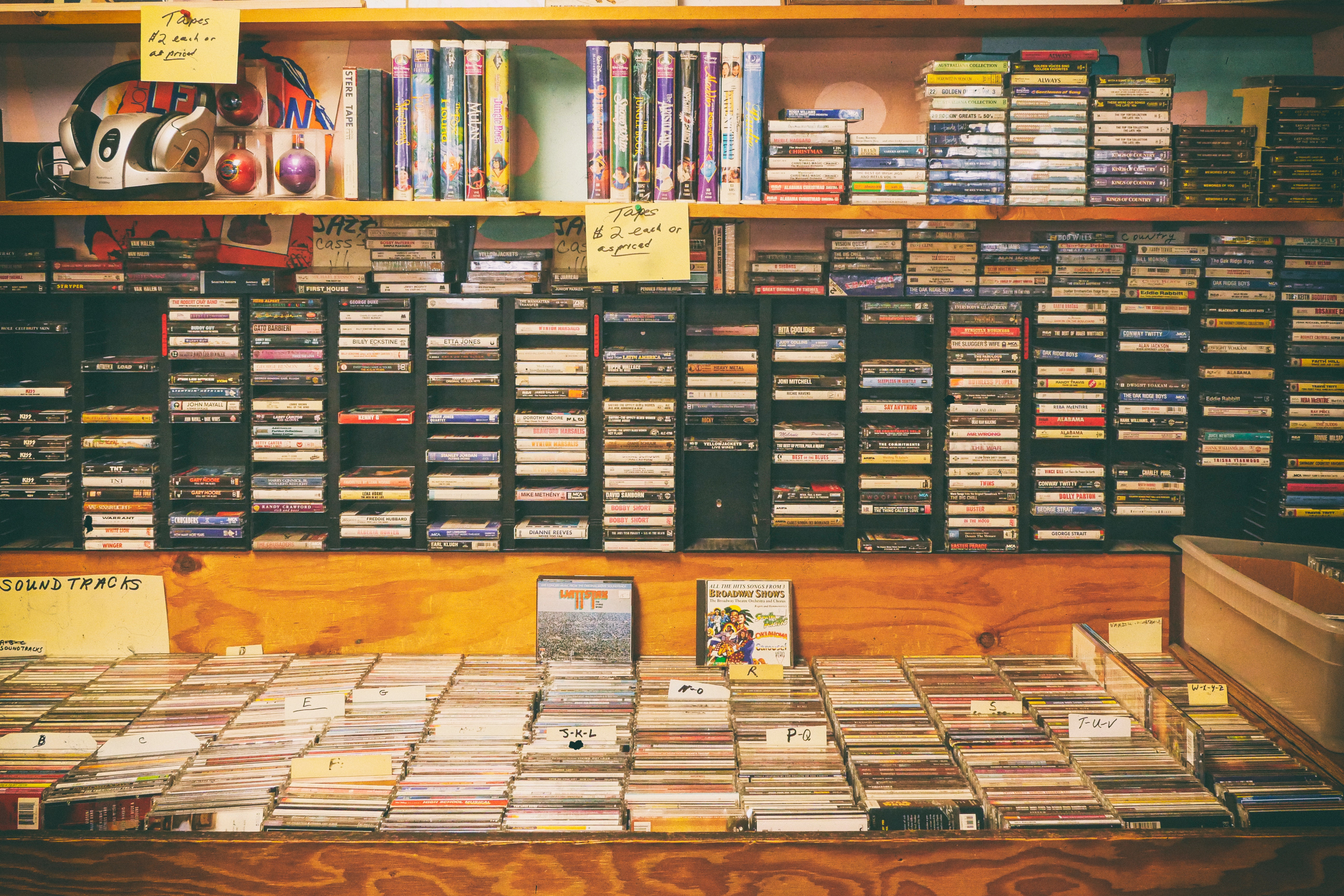
When the CD was first introduced in the 1980s, it was packaged in a plastic jewel case. This design was simple and functional but lacked the creativity and aesthetic appeal of vinyl records, which had been the dominant format for music recordings for several decades and provided a very large surface for the album cover design. Conceptual designs that tied to the back side of the cover created even larger canvases for album designers to show their artistry. In the 1990s, the music industry began experimenting with new CD packaging designs. One popular design was the "longbox," which was essentially a cardboard box that was the same height as a vinyl record but slightly wider. The longbox was designed to be placed on store shelves alongside vinyl records, and its size made it more noticeable than the standard jewel case, although a good idea on its own, this model did not last for too long and the practicality of the Jewel Case dominated the industry for the decades to come, with one downside; the surface for album art was much smaller and seamless designs were almost nonexistent as jewel cases came with front, back and side sections separated by the framing of the case. In the late 1990s, the digipack emerged as a popular CD packaging design. The first digipacks were produced by the German company AGI (Advanced Graphics International) and were used to package the CD releases of the band Kraftwerk. The digipack was an instant hit with music fans and artists alike. Its paper or cardboard construction gave it a more organic and tactile feel than the plastic jewel case, and its ability to hold a booklet or other printed materials gave artists a new canvas on which to express their creativity. No more dealing with producing booklets out of the thinnest paper available, and no more page limitations, as the fold mold of digipacks could be altered based on the content they were supposed to hold. In the early 2000s, the digipack became the packaging of choice for many indie and alternative artists. These artists valued the digipack's DIY aesthetic and its ability to be produced in small quantities without the need for expensive equipment. This redefined the conceptuality of the album cover designs as well; as seamless designs came back into the game, creating a horizontal canvas both in the front and in the back of an album cover. Album designers began altering their approach from square-based concepts to wider concepts. Over the years, the digipack has evolved in several ways. Some designers have experimented with different types of paper and card stock to create unique textures and finishes, while others have added die-cuts, embossing, and other special effects to make their digipacks stand out. One notable evolution of the digipack became the "digipak," don't let the misspelling misguide you, this is the official name of it! It is the type most commonly used nowadays; a type of digipack that includes a plastic tray to hold the CD. The digipak combines the best of both worlds by offering the tactile feel of paper or cardboard with the protection and durability of plastic. In recent years, some artists have abandoned physical packaging altogether in favor of digital releases. However, many music fans still appreciate the tangible experience of owning a physical copy of their favorite album, and let's be honest, merch is a form of earning for most musicians, regardless of their activities on stage or online. In this community, the digipack remains a popular choice for artists and labels looking to create a unique and memorable packaging design for their music. While the music industry continues to evolve and adapt to new technologies, it is likely that the digipack will remain a staple of physical music packaging for many years to come. Here at AlbumCoverZone, we offer exclusive ready-made CD cover art designs, but if you wish to have a Digipack or a Digipak product, we can provide that to you as well! You can look for extra services we provide via https://albumcoverzone.com/services and contact us to discuss your unique design ideas!

On Creativity and Flow Under Stress
You can do more. But you don’t have to. If you are reading this in the spring of 2020, you are indoors due to Covid-2019 and you are either thinking of a new music piece, or you just finished producing one. Self-isolation is gaining new meanings, taking down possibilities, and creating others, and we are all in this together. May the reason be protecting ourselves or others, and may we all come out of this chapter as healthy as possible, today we all have our responsibility to stay indoors. How does this affect the healthy musician? No concert. No orchestra or band rehearsal. No ensemble recording session, no release party, no spring festival, no cast to shoot a video with. No busking. However, not every musician has lost their jobs, meaning not everyone has a sudden burst of free time either. Still, a lot of music business models were not entirely prepared for a moment like this and it is time for them to challenge themselves to reshape their formula for the current situation. Performance-dependent careers are searching and finding various media tools to keep live music alive. The new dance venue is a conference call, the new chamber music concert is a split-screen video. But the modern consumer, the Streamer, is not used to paying tickets for media content yet, and such is a rule we have to shape as a collective. While indoor productions can limit the musicians who are used to acoustic and live realities in certain aspects, the “no product-no proof” deal of today’s intensely content-based creative scene pushes every musician to take the next step to record material, finish off that single, make that song release. As usual, consistency is the key, maybe more than ever, since there are more and more people trying for the first time to establish themselves in the music scene. Saying this, some creative people are losing their inspiration while others are bursting with new ideas. Various condition changes shift and shape our mentalities differently, hence escapism is as valid of a creative process as expressionism. While some are setting goals for more creativity, others are choosing to hibernate in terms of production. While some of today’s musicians are focusing on the healthy days to come, the joy of love, and the tale that made everyone smile, other musicians are aiming to release the emotional burden they have, reflect the feelings of the ones that have the enemy at their gates, in their homes. All paths are equally valid, natural, and useful, because even more than before, there are no rules. Whichever emotional and financial state you are in, the important thing to keep in mind is that you are not alone. One shouldn’t feel guilty about using this time for creativity as much as they can, nor one shouldn’t feel exhausted for not making more out of it. One shouldn’t avoid the happy because the maintenance of the good and the beautiful is as priceless as exploring the new and expressing the negative. May the reason be protecting ourselves or others, and may we all come out of this chapter as healthy as possible, today we all have our responsibility to stay indoors, and that is not normal and what comes out of it does not have to follow any expectations besides your realistic ones. AlbumCoverZone is here, wishing the best to everyone, and is here for the inspired ones to show their music with the visual content that will leave the first impression on their audience, because music goes on, with a library of possibilities to reflect both sides of the creative coin, the escapist and the expressionist. And we are here for the one that is waiting for the creativity to come back.

What Design Can Tell
Check your stream history, and check the homepage of your Spotify or Apple Music. Check the YouTube opening screen. They all represent you. You can learn about someone from their homepage on either platform. This is why the audience needs to recognize what music you are making in a millisecond. They are good at recognizing because it is crucial for them. They go for the thing they can place in their orbit. Because although we are talking about music, we are talking about identity. And identity starts with first impression; often visual. The album cover art of any music needs to look good next to its consumer; it needs to fit well with the other album cover art on the homepage of their Spotify account. It needs to sit well next to the other CDs on the bookshelf. Because what we listen to can tell others about who we are, we all are very careful about picking the right image; starting from the album cover art. Passing the message of your album cover via the album cover art is a tricky thing, needs lots of soul searching, looking into the mirror, and listening to the songs over and over again; or sometimes it can come as a vision even before the song arrives to your mind; but then it might be very hard to put in words, or in any shape or form, to use it in your album cover art. Passing the message of what genre your music style is is much easier. Because the internet has a large community for most music styles if not all, and each genre sticks out via certain visual elements that make them recognizable. The trick is to realize them, and follow these qualities till the end; till your album cover art is selected. Easy but still tricky. Especially today’s variety in album cover art surprises everyone. Unlike what they say, folk still judge a book by its cover, and the same rule applies to the album cover art as well. Every one of us has experienced at some point in our lives that letdown; that book or music or movie you purchased or committed based on what you see not fulfilling your expectations. This doesn’t have to mean the product you buy is necessarily bad, it just means the cover was promising something else and the content is not matching with its presentation. Bad. A rebellious artwork presenting a sweet-sounding folk band, a very serious-looking album cover art hiding behind the most freak punk album, a beach photo on a metal album, and such; of course the element of surprise can be considered a positive attribute; but when it comes down to reaching out to the audience you are targeting, it is not a worthy risk to take. Album cover art is a cross-genre style, since we are aiming to put the abstract into the concrete via the visual, there can be multiple ways of presenting a track or an entire album. In other words; a vintage photograph of a train station can present a pop album, a rock album, or a hip-hop album. And typography comes onto the stage, at this point, carrying extremely great importance; because the text layout of an album cover art can tell so much, and sometimes even more specifiically than the cover artwork. If you picture the same photo with various text styles you can imagine various genres immediately shaping form. So; looking for something original, we may place ourselves out of the orbit of our audience. Although required, the uniqueness of an album cover art is not always for the best; it comes with both success and failure stories because no matter how unique the sound of a musician is; the presentation has to be something relatable for the audience, one way or the other. Even though we are promising the audience a new, unique, and irreplaceable musical experience through album cover art, we are also promising the audience that they WILL like it, and that it DOES fit their taste in music. This is why, how to choose the right album cover for you is crucially important. It has to pass on the quality of your message as much as your message, and it still has to look relatable to the targeted audience type. A successful album cover art has to create curiosity and still reassure that promises given will be kept. If you are aiming to become recognized by the community, you have to show them you are one of them. Because eventually, even outsiders team up.So, while choosing your cover art for your next album, pay attention to the genres of all covers you see representing and go for the ones that you know would fit well next to the music of your heroes and heroines. Here at AlbumCoverZone, we pay great attention to categorizing our album cover art designs based on the genres we see them fit, we imagine them to be, and we see that our customers are using them wisely regarding representing the genres of their music. So, join them and enjoy our collection of more than 3.000 unique album cover art and design, because we made some of them specially for you.
Vinyl vs. CD and Analog vs. Digital
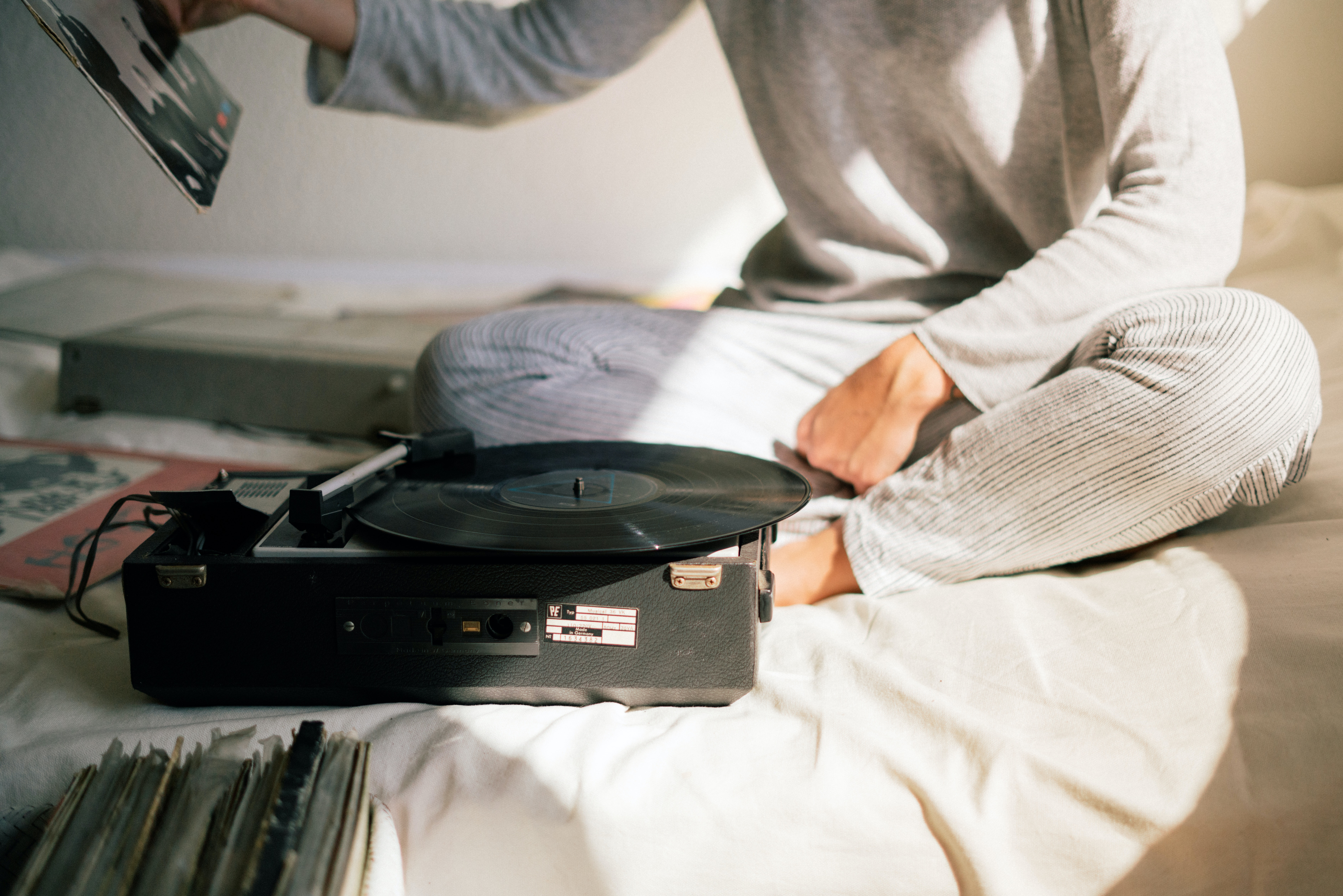
Vinyl has seen a resurgence in popularity in recent years, with many people choosing to buy vinyl records instead of CDs due to the unique sound quality, nostalgia, collectability, artwork, and support of independent artists that vinyl records offer. While CDs and digital downloads still have their place in the music industry, many music fans are embracing the physicality and uniqueness of vinyl records. Although it has been the preferred format for collectors and supporters of independent artists lately, one needs to keep in mind that it is generally more expensive to produce vinyl records in small quantities compared to CDs. In fact, vinyl production is typically more expensive than CD production, especially when it comes to smaller runs, which means, in most cases, independent artists who are on the rise need to produce more expensive products to receive the support they so much deserve. Nevertheless, since there has been an interesting shift in the market, here at AlbumCoverZone we wanted to gather information related to a few debates regarding the production process and most importantly, the "sound". Music recording has come a long way since the early days of wax cylinders and reel-to-reel tapes and today, the two primary methods of recording music still include analog side by side with digital. While both methods have their advantages and disadvantages, the choice of which method to use ultimately depends on the preferences of the artist and the intended audience. Analog recording involves capturing sound waves through a microphone and converting them into an electrical signal, which is then stored on a physical medium such as a tape or vinyl record. The process of analog recording creates a continuous waveform, which captures the full range of frequencies and nuances of the original sound. One of the main advantages of analog recording is its warm, organic sound quality. Because the sound waves are captured in a continuous waveform, the resulting recording has a natural, unprocessed sound that many audiophiles find appealing. Additionally, analog recording is more forgiving of imperfections in the recording process, such as noise or distortion, which can add character to the final product. When analog recordings are transferred onto an LP, they retain their warm, natural sound quality. The grooves on an LP are physically etched into the vinyl, which allows for the full range of frequencies and nuances of the recording to be captured. Additionally, each LP is unique, with its subtle variations in sound due to the physical nature of the recording process. Digital recording, on the other hand, involves capturing sound waves through a microphone and converting them into a series of numerical values, or samples, which are then stored as digital data. The process of digital recording creates a series of discrete values that approximate the original sound, rather than a continuous waveform.One of the main advantages of digital recording is its precision and control. Because the sound waves are converted into discrete values, digital recordings can be manipulated and processed with greater accuracy than analog recordings. Additionally, digital recording can eliminate imperfections in the recording process, resulting in a cleaner, more polished sound. However, some audiophiles argue that digital recording can sound sterile or artificial compared to analog recordings. The discrete values used in digital recording can create a harsh or "digital" sound, especially in the higher frequencies. Additionally, digital recording is less forgiving of imperfections in the recording process, which can result in a less natural or "flat" sound quality. When digital recordings are transferred onto an LP, the resulting sound quality can be affected by the limitations of the vinyl format. Because vinyl records have physical grooves that are etched into the surface, there are limitations to the amount of detail that can be captured. Additionally, digital recordings can be compressed, which can further limit the range of frequencies and nuances that are captured on an LP. And now, another heavily discussed topic: It's a commonly held belief among audiophiles that digital recordings can sound better on vinyl than they do on CD. However, whether or not this is true is a matter of debate. On one hand, vinyl has certain advantages over CD when it comes to sound quality. Vinyl records have a warmer, more natural sound than CDs, thanks in part to the physical nature of the format. When a record is played, the stylus physically touches the grooves on the vinyl, creating an analog waveform that captures the full range of frequencies and nuances of the recording. This can give vinyl recordings a more organic, dynamic sound than digital recordings. On the other hand, digital recordings have advantages over vinyl when it comes to sound quality as well. Digital recordings are capable of capturing a wider range of frequencies and dynamic range than vinyl, which can result in a more detailed and accurate sound. Additionally, digital recordings are less susceptible to noise and distortion than vinyl, which can result in a cleaner, more polished sound. When it comes to comparing digital recordings on vinyl versus CD, the differences in sound quality are likely to be less noticeable than the differences between analog and digital recordings. While vinyl has certain advantages over CD, such as its warmer sound and greater dynamic range, it also has limitations that can affect sound quality, such as surface noise and wear and tear. Additionally, digital recordings that are specifically mastered for vinyl can take advantage of the strengths of the format, resulting in a higher quality sound than a digital recording that is simply transferred to vinyl without consideration for the format's limitations. Ultimately, whether digital recordings sound better on vinyl than on CD is a matter of personal preference. Some audiophiles may prefer the warmth and organic sound of vinyl, while others may prefer the accuracy and detail of digital recordings. The most important thing is to choose the format that best suits the music and the listener's preferences. What can we do to help? First of all, here at AlbumCoverZone, our designers work to deliver album cover designs suitable for various types of releases; meaning screen-friendly album cover designs, CD case-friendly album cover designs, and vinyl-friendly album cover designs. Upon your album cover purchase, you immediately receive a file with dimensions suitable for the two most common end products; CD printing and digital releases. We would like to let you know, that should you wish to produce vinyl products with our album cover designs, simply contact us and we will provide you the format suitable for large-size printings as well!

How to Reach Your Target Audience
Power of Association Each musician is unique and cannot be repeated, but still, being present in a group of artists that are similar to you is one of the best ways to reach to the audience that is looking for the style of music that you are producing. Credibility of an unknown music can be gained by associating it to the known music. Although no one would like to be remembered as "That guy that sounds like the singer of that band", let's be honest, you can see it as a huge compliment on your way up the ladder as well. Which is why no matter what style of music, everyone used to aim for the "radio" for recognition. Track lenghts were decided with this strategy in mind (if not they were butchered by the radio producers to fit in the slot). Every album had one or two "possible radio hits", composed and arranged in a way that they were suitable for the DJ to use in the morning traffic hour. Today's listener is listening to the radio in a different way. We are now consuming playlists as much as (if not more than) we consume the radio. Either done by the streaming platform itself, or by individuals, the playlists are the new way to discover new material. Because playlists give the audience the chance to check new stuff out without having to choose or commit to an unknown album of an unknown person. Because the audience still wants to discover material just by bumping into it. So how to reach to that audience? One of the answers to this question lies in playlists. Prepare playlists that have an aim to gain followers. Like everything in life, consistency is the key. Creating catchy playlists is serious business. Be commited to the cause and gain attention and praising from strangers, simply by your taste in music. Title your playlist with clarity and with a spark of uniqueness. Put a cover art to it instead of the ready made layout the platform provides. Don't fill in your playlists with hundreds of songs! Listeners of succesful playlists often use them as albums and listen to them multiple times. Do your best to co-exist with your heroes and heroines. Your band released a single. It has stylistic similarities with an all time favorite track of a super duper popular band. Be bold and don't fight your inspiration sources. Make playlists that includes that well known track from the well known artist and put your single right under it! Chances of people running into your playlist is going to rise if there are already famous tracks in it. Promise of similar style and the chance of bumping into a new track will motivate listeners to take a look at your playlist and discover you in the middle of it. Share your playlist around. Send the playlist to your friends for it to gain momentum; the credibility of the playlist provided by famous musicians in your playlist will help you hit more people than your close circle. Someone looking for a song of an established artist will see the song appearing in a playlist that is listened by hundreds of people and will be interested in your playlist. This way you don't only show your track to some random listener that you have no idea of what his or her taste is like, you are showing your music to the person has a taste very similar to your own. What better way to advertise your music to a targeted audience than this? So here you go, now enjoy the selection of covers in AlbumCoverZone with this idea in mind! We are sure that your future album's marketing strategy will be covered by us. ;)

Should I Put My Music on Spotify, iTunes, etc.?
Should I put my music on Spotify, iTunes, etc.? We know too many musicians that have been there, asked that. Having active SoundCloud accounts, busy YouTube channels, sharing their music and musicianship positively and shamelessly, sharing everything they have, while gulping with the idea of having an artist profile on Spotify, iTunes, and other platforms. To some, it is a matter of honor to not be present on “commercial” platforms, and others just don’t feel “ready yet” for the quality of their music. We believe the “Not ready yet” pile includes musicians who heard from their colleagues and more often from sound engineers in their circles who want to keep their business up and running, that being on a mainstream music listening platform takes more than just having good music and fine designed album covers; that it requires a label. (We will get to this in a few paragraphs). Then there is the pride that keeps the independent musicians away from the commercial platforms. With all due respect to everyone’s unique opinions, we believe for the sake of motivating the rather confused souls out there who actually want to dive into these platforms like Spotify, Apple Music, Pandora, Amazon Music, etc., dropping a line here would do good. Social circles do have an effect on each artist’s career strategies and we have seen many artists being pulled back by their fellow musicians in order to “fight the cause” against low-paying stream services. “Because stream platforms are scamming the artists,” they say, “the artists are not getting what they deserve”. Whoever encounters opinions related to this must remember one thing; music streaming platforms are not music stores. They are the equivalents of radios that either work with the paid add fees, governmental support, or by patrons; which still falls under the same category, money comes in from somewhere, and pays the cost (monthly salary of the accountant and the refilling of the coffee filters in the radio studio’s kitchen included), and the rest goes to the musician with a percentage cut depending on how kind-hearted the management is. Almost no music stream platform is trying to sell albums; so expecting to receive an album worth money out of one person listening to the album once simply doesn’t add up and it also doesn’t make the stream industries’ finance plan unethical. Receiving payment from the music streaming platforms is just like waiting to get paid by the “radio” in a year or two in funnily minuscule amounts. Radios often pay royalties with the assumed amount of audience per passing of music; streaming platforms pay per listening of an individual, which makes the numbers look unfortunately petite after mind-blowing calculations. As long as we are not on the decision committee, the only thing we can do is to pass the information; today, the Billboard prize conditions count 1,250 to 3,750 streams as one album unit depending on the platforms used to listen to the songs. Do the math.As far as the “I am not ready”, or “I am not good enough” mentality is concerned, we believe it is time for a wake-up call. What used to be part of the duties of the commercial label, the promoter, the manager, etc., etc., is or can be shouldered by the artist today. Even the most top-notch labels can make effective decisions to leave the “promotional posts” to the hands of the artists for the sake of “authenticity” which is a valid reason that all the while lightens up the workload of the management. Such responsibility distributions between the boss and the artist are revolutionary, since only a couple of decades ago, not all but many musicians were “shaped” by the commercial labels, others were limited at times, and others picked up via newspaper ads (I assume we all know the famous “Spice Girls Wanted” post on the yellow pages, if you didn’t know Google “spice girls newspaper ad”). The list can go on as far as finding a way to design your album art (well, that’s why we are here). And distributing an album that used to be the label’s duty for centuries(!) (you get the point), can now also be shouldered by the artist as easily.What we hear from our fellow customers and other musicians is that the percentages some commercial labels take as a cut in order to provide the online stream distribution services can reach very astronomical and ridiculous numbers. Mind that we are not talking about ALL labels, most independent labels are pretty transparent towards their artists about this sort of stuff, but if you are waiting for your moment to step into the spotlight in the online market to appear out of nowhere with a label wanting to sign you in, we say don’t wait up, just go for it. We say go for it because if you have the content ready, and are willing to share it on SoundCloud, YouTube, and alikes for people to hear it, if you are facing commentary and criticism (as long as it is constructive, it counts), and getting better by it, it is most likely already time to step up the game. It is one of those things that if you don't do it, no one else will do it for you.Bear in mind that Album Cover Zone is not receiving any benefit from bringing these names into this article. We are simply here to help and give you the push if necessary. “Which distributor service should I use for my music?”Heheh. It is a hot ground at the moment. If you go to their websites you can see the competition bleeding out onto the very first lines of the main pages of DistroKid, CDBaby, ReverbNation, LANDR, Tunecore, RouteNote, Ditto Music, and all the rest. They begin with comparisons and competitive advertising phrases that can corner you into a mental blurb of indecisiveness; believe us, we know. We won’t tell our favorite here, because choices can vary when it comes to choosing a distributor but what we say is this; you can choose on your own; you don’t need a third-party label to fill up the self-explanatory online distribution form to get your music out there to every platform available, to obtain a fancy sounding official ISRC number for your music (this most often comes automatically), to be registered as an official artist with an official music product, and often in these platforms you get to sign in your product with your own label name.At the end of the day, what needs to be recognized is this; each of these platforms serves a group of audience that can not be found on the other platforms. Because hardly any “target audience” profile has two apps downloaded and subscribed to or two websites frequented to consume music; people usually pick one app and one website based on a decision-making process that is not in their hands. As upcoming artists who need to grow their fanbase, it is a musician’s duty to be available in any possible place to actually make a living out of your music. Wanna make money per album without waiting to be heard from 1K to 3K? Higher up the price on SoundCloud, appear on iTunes and advertise like crazy, or sell your album in physical format to your fanbase immediately (easiest of the three options in our opinion), we are here to design the whole packaging in any format you need to sell physical copies as well, simply contact us via support@albumcoverzone.comSo, go ahead and do the research. You can do this on your own.In the meantime, share this article, explore our catalog, pick your next album’s cover from our collection of more than 4.000 unique covers, check our newest, hottest album cover designs via https://albumcoverzone.com/new, and keep up being the amazingly hardworking artist that you are. Because if you have reached this far, you are doing your homework well.

Power of Singles
Being an independent musician in today's fast-paced music industry can be both exciting and challenging. With the rise of digital platforms and streaming services, releasing singles has become an increasingly popular strategy for artists to capture attention and connect with their audience. Singles are useful for quite a lot: Grabbing Attention: In a world where attention spans are shorter than ever, releasing singles can help you cut through the noise and make a lasting impact. A single-focused release strategy allows you to capture listeners' attention and make a strong first impression. It's a chance to showcase your unique sound, style, and artistic vision in a concise and impactful way, and unlike an album more than once because having multiple singles scheduled for release increases the chances of your visibility on the “release radar”s of all platforms for longer periods. Building Momentum: Releasing singles regularly can help you build momentum and keep your audience engaged. The audience likes to commit to musicians, writers, and TV shows that prove themselves to be "stage active" for long periods. Each release becomes an opportunity to generate buzz, gain new fans, and keep existing ones excited. Consistency is key, as it shows dedication and professionalism, and this matters for newcomers on their way to becoming your fans, as much as your fans who are on their way to becoming your hard fans. By releasing singles consistently, you keep your music (and your name) fresh in the minds of listeners, creating anticipation and paving the way for future releases. Testing the Waters: Releasing singles allows you to experiment with different sounds, genres, and styles. It provides a platform for you to gauge audience reactions and discover what resonates most with your listeners. It's an opportunity to define your sound, learn from feedback, and make informed decisions about your musical direction. Each single can be a stepping stone towards finding and strengthening your artistic voice. Maximizing Exposure: The digital landscape offers a vast array of platforms to showcase your music. Releasing singles allows you to take advantage of these platforms and reach a broader audience. Streaming services, playlists, social media, and online communities provide opportunities (no matter how harsh the rules of the game might be), for discovery and exposure. By releasing singles consistently, you increase the chances of getting featured, gaining playlist placements, and expanding your fanbase. Connecting with Your Audience: Singles can help you build a deeper connection with your audience. Each release becomes a conversation starter, sparking discussions and engaging listeners on a personal level. By releasing singles and communicating with your fans, you prove your loyalty to your audience, which creates positive feedback; and the loyalty of your audience towards you. Releasing singles was a huge part of the strategies of major labels in the past decades, and just as much, releasing singles as an independent musician offers numerous benefits for your musical journey. It allows you to grab attention, build momentum, test the waters, maximize exposure, and connect with your audience on a deeper level. No matter how challenging the administration part may seem, we would strongly recommend you embrace the power of singles as a strategic approach to releasing your music. With each release, you have the opportunity to captivate, inspire, and leave a lasting impression on your listeners. So, take the leap, trust in your talent, and let your music shine, one single at a time. Remember, your musical journey is an ongoing adventure, and releasing singles can be the fuel that keeps it moving forward. Keep creating, keep releasing, and keep making your mark as an independent musician. The stage is yours. All the while, AlbumCoverZone is here to speed up the process of your release strategy with thousands of unique album cover designs to choose from!
How to Improve the Quality of Your Home Recording Session
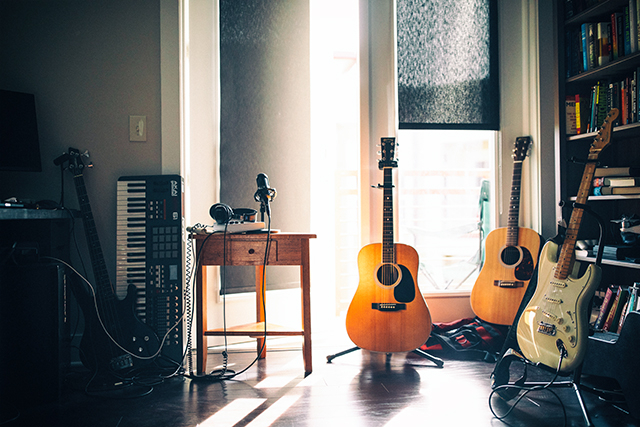
Home studio recordings and productions have increased in the past years thanks to the evermore accessible technology, free online content that allows people to learn about recording techniques, and of course, thanks to the ever-pursuing spirit of the freelancer. But still, it can be challenging to venture into this realm just by yourself without the help of a professional sound engineer, or the guidance of an experienced amateur, to support you on your recording. Be that you are a musician who wishes to record his/her own music or an aspiring sound engineer who searches for the best sound qualities, you must take from the beginning some very important focus points to make your recordings sound as well as possible from the first moment. Prioritise Recording Above MixingThe first thing to have in mind is that the more careful you are with the quality of your recording session, the less time you will have to spend on the mixing of your music. You should avoid having to fix your sound on the mix as much as possible, so always aim for a clean recording. Check Room AcousticsTest sound inside your recording room. A basic and zero-budget procedure is to clap your hands in different places of the room and listen for possible wall reflections and reverberation. The goal is to understand if it’s suitable for the style of music you’re recording and if there are unwanted reflections that could interfere with the quality of your recording. Remember that it is easier to add the characteristics of a room later on mixing than to take the characteristics of a room out from the recording. If you want to learn more about the sound treatment of a room check out our other blog posts. Treating Room Acoustics Certain sounds must be avoided. This can be done by covering up stone surfaces, figuring out bass traps for the corners, and dampening the sound with absorbers to avoid reflections where the listening or recording is happening. But this doesn't mean the room should have no sound at all. If you over-dry your room sound you will see that this is also not the way. There are various formulas to figure out how much space of a surface should be covered with sound treatment. Reduce Surrounding NoiseAs part of the treatment of the room, you should also search for unwanted noise. For example, make sure that your computer’s fan isn’t being detected by the microphone, or if there is noise coming from the street, or surrounding rooms/flats. Depending on it, you might have to find your way around to reduce the noise as much as possible, such as, turning off devices that make noise, soundproofing your room, learning when your surroundings get quieter, such as off rush hours, etc. Mic and Instrument PositioningIndependently of how good your microphone or instrument is, you must know where to place them correctly. The goal is to find the place where the microphone captures a sound that is most similar to the real tone of the instrument. A similar thing happens with the instrument placement in the room. In your “Check Room Acoustics” step you probably noticed how different places in the room react differently to your clapping. The same rule applies to the voice or an instrument, so be careful with their placement. Don’t Let It BleedWhen talking about mic positioning one should also consider the quantity of sound that is taken by the mic. Check out the input levels on your console and make sure the sound doesn’t bleed and therefore distort the quality of your recording. Different instruments can produce different intensities and you will have to make adjustments for every single one of them. Pop Filter for SingersA pop filter is a simple solution and essential tool to have if you are recording voice and all those “p’s” are coming through to the recording. Tune Your Instruments101 for every instrument player (and singers in their natural way) - make sure your instrument is in tune every time you record. If your instrument is not in tune, the recording will most probably not sound well. There are ways to correct pitch but to a certain extent. Try Out Different Speakers/HeadphonesIf you have the chance, have different devices to listen to your music. Every set of speakers and headphones has its character, some darker, others brighter. With some, you can easily distinguish all the instruments whilst in others you can’t. Remember that everyone else listens to music with all sorts of equipment and that your recording should sound well in the majority of them. Add Effects Only AfterThere is a tendency for many musicians who have access to sound effects to immediately use them when recording. Even though it might sound very nice right away, it can limit you after when you’re in the mixing. For you will not be able to alter much more the effects themselves, since they have already been applied to the original recording. So, add your sound treatment only after you record. Perform The Best You CanWhen you check out every point of this list you should be able to finally record your music with a good sound quality. If you have tried before to record without considering some of these aspects, you will most likely feel a big difference in the quality of your recording. Generally, these are some of the basic concerns of sound engineering applied to a home studio environment. Only after these details are sorted out comes the time to record. If the clock is ticking, make sure to first have “safe takes”, so that no matter what you end up with something that can be worked on the mix. Safe takes include things such as playing with a steady beat, and not making wrong notes or unwanted noises. Once this is done you can move to “inspiring takes”, where your main focus is on playing with the real feeling of the music, even though it might take you off the “perfection” track. It is very likely that the inspiring take will be the take you chose, and then the only thing you have to do after is treat it in the mix while passing here and there bits from the safe takes.